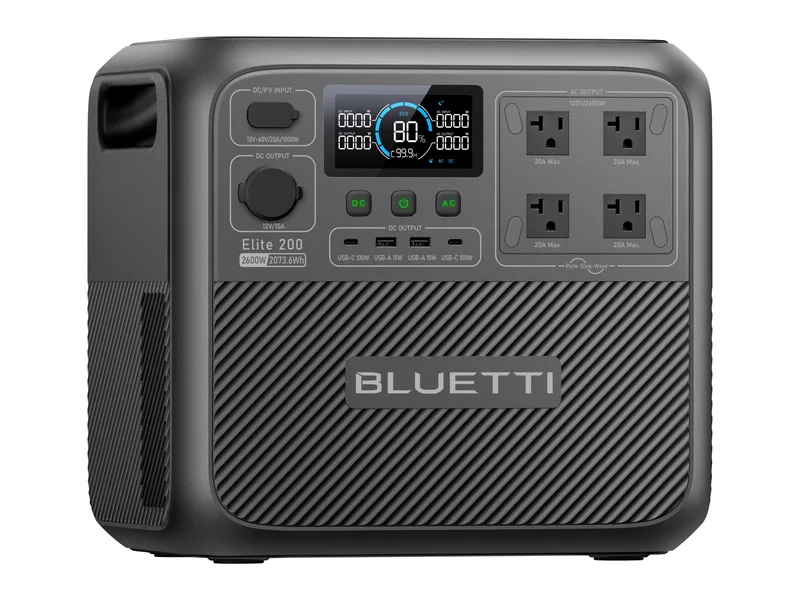
BLUETTI Elite 200 V2
Enough battery for a real outage night, still liftable by one adult.

A portable power station can run a refrigerator if its AC output handles the appliance, including compressor startup. Battery capacity then determines how long it can help. Start with your refrigerator, not a product runtime claim.
We may earn a commission when you buy through our links. As an Amazon Associate I earn from qualifying purchases. Affiliate disclosure
Research-based, not lab-tested. Read our research method and match the documented requirements to your household before purchasing.
Write down the refrigerator model, voltage and manufacturer information about starting power. Compressor startup can demand more power than normal operation. A station’s battery capacity in watt-hours is not its output limit in watts. Having plenty of stored energy does not help if the inverter cannot start the appliance.
Use the appliance manual and the station’s ordinary AC rating when checking compatibility. Do not substitute a special resistive-load boost mode for a compressor’s requirements. For example, Jackery’s support page separately lists the Explorer 1000 v2’s AC output and instantaneous output limits. That distinction matters more than the size of its carrying handle.
A refrigerator cycles on and off. Its maximum running draw is not necessarily its average consumption over a full day. A suitable plug-in energy meter can help you observe your own appliance during normal use; our article does not report a test of your refrigerator or either station.
For planning, divide usable energy delivered to the appliance by its average load. Illustrative arithmetic only: if a setup delivered 800Wh and the refrigerator averaged 80W over that period, the calculation would be 10 hours. Those assumed numbers are not measurements, product ratings or a runtime guarantee. Inverter losses, standby consumption, ambient conditions and door opening change the result.
Count other devices separately. A phone, router and refrigerator sharing a station use the same finite energy reserve. Decide which loads you would disconnect first, and how you would recharge before planning for a long outage.
The Jackery Explorer 1000 v2 is a candidate when portability matters and its output and capacity fit your verified load. The BLUETTI Elite 200 V2 is another candidate when you can handle a larger unit. Neither earns a universal refrigerator-runtime promise here. Compare the manufacturer specifications and the reasons to skip each in our home-backup guide.
A panel is not guaranteed overnight or bad-weather recharging. Confirm your station’s inputs using our solar compatibility guide. If you cannot establish a replenishment plan, compare the trade-offs in generator versus power station before buying more battery.
A station starting the refrigerator does not prove that previously warmed food is safe. FoodSafety.gov advises keeping the door closed and explains the four-hour limit for refrigerated perishable food without power. Use its item-by-item chart rather than taste or smell to judge safety. Restoring power does not erase the earlier outage.
First, write down your refrigerator’s running and startup requirements and your recharge plan. Then compare the home-backup power stations by those requirements. Finally, use the buying checklist to verify the exact unit, bundle, inputs and purchase terms. Skip a station that cannot meet the job, regardless of its capacity headline.
No. Capacity alone does not establish voltage, continuous output, startup capability or delivered runtime. Verify those requirements against the specific appliance and station.
Plug-in appliance backup and connecting house circuits are different jobs. Do not feed a house through a wall outlet. Any circuit connection needs appropriate equipment and a qualified professional’s advice.
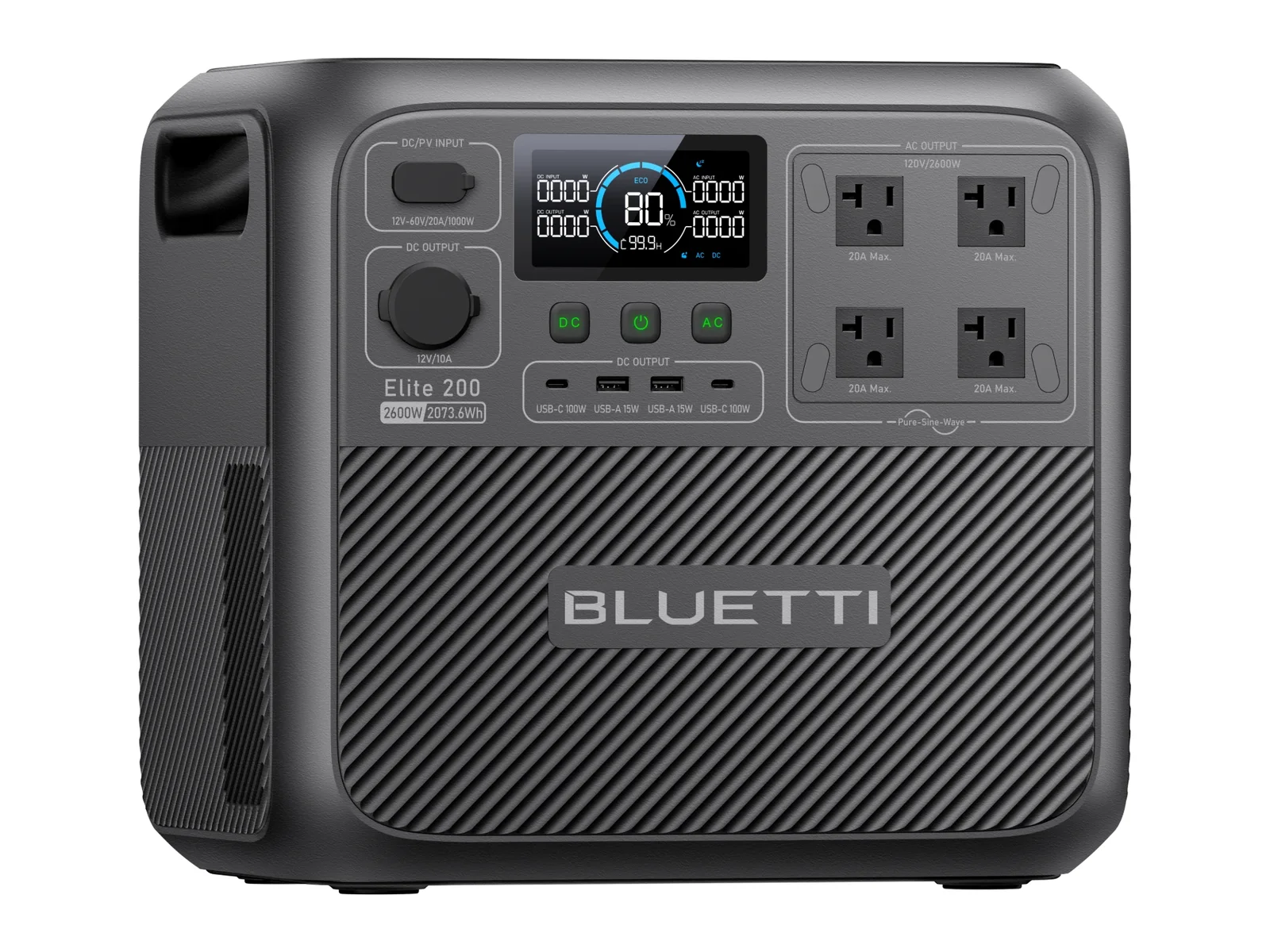
No. The image identifies the pictured product. Confirm exact device requirements, connections and the recharge plan independently before relying on the setup.
The Elite 200 V2 is a candidate only after you confirm your refrigerator’s voltage, startup demand and energy use. The manufacturer lists 2,073.6Wh and 2,600W continuous output at 120V; these ratings do not establish hours of refrigeration. Use the sizing worksheet with your own load and reserve assumptions.
Read the BLUETTI research review for fixed-capacity, weight and recharge limits. Compare alternatives in BLUETTI vs EcoFlow vs Jackery. For the Jackery candidate discussed above, this purchase button uses Amazon; the BLUETTI/Amazon buttons below concern the Elite 200 V2.
If solar is part of your recharge plan, compare the solar kit arrangements and confirm panel/cable compatibility. Recharging the station is a separate requirement from starting the refrigerator.
Updated Oct 14, 2026: clarified the startup, energy and recharge checks to complete before choosing a station.
Enough battery for a real outage night, still liftable by one adult.
