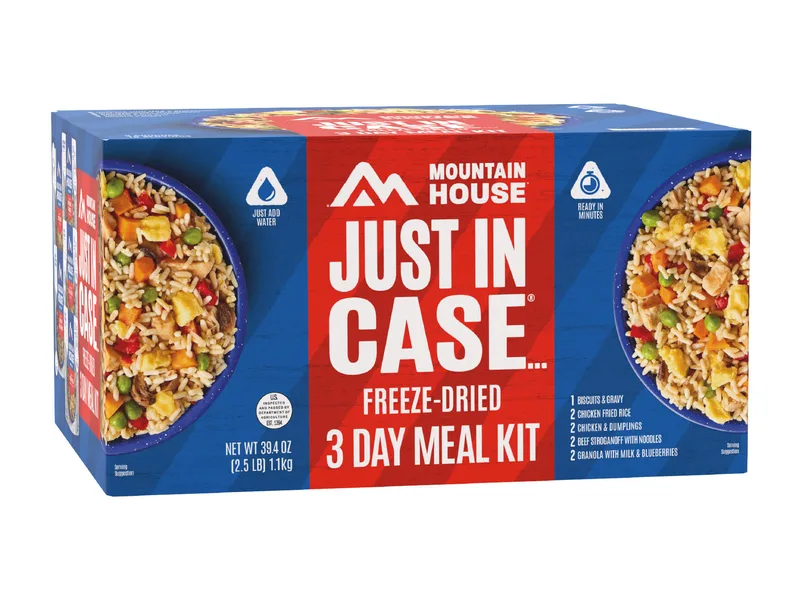
Mountain House Just In Case 3-Day Emergency Food Supply
Manufacturer-named 3-Day kit; check portions, preparation water and storage directions.

Start with food your household already eats, record the gaps and expand only as storage space and preparation resources allow. Use the worksheet below to compare ordinary pantry food with packaged emergency supplies before buying.
We may earn a commission when you buy through our links. As an Amazon Associate I earn from qualifying purchases. Affiliate disclosure
Research-based, not lab-tested. Read our research method and match the documented requirements to your household before purchasing.
To put food into a complete 14-day household plan, use the two-week home supply checklist alongside your water, light and sanitation inventory.
List household members, food preferences and dietary restrictions, then choose a planning period. Record usable food already on hand before making a shopping list. Treat the planning period as your goal, not a promise printed on a kit name. The 72-hour checklist is a manageable place to start.
Research-based, not lab-tested: we have not taste-tested the MPS supplies linked below. This guide compares planning approaches rather than ranking kits by commission. The hero identifies the existing Mountain House pouch alternative in our freeze-dried guide; it does not show MPS food.
For each item, record whether it needs water, heat, cookware or refrigeration after opening. Check the label rather than assuming all emergency food works the same way. USDA’s emergency guidance includes shelf-stable food in a planned reserve.
Our planning suggestion is to keep usable ready-to-eat choices alongside any food requiring preparation. A pouch or bucket does not supply its own drinking water or cooking equipment. Review water storage and rotation and the winter outage plan separately.
USDA advises a cool, dry place for shelf-stable food. Follow the exact product’s storage and handling directions; no universal shelf-life number applies to this guide. Leave space to read labels and retrieve supplies.
Do not assume a long storage claim applies after a package is opened. Check opening and preparation directions for the selected item before planning repeated meals from it.
Print this page from your browser. This is an inventory template, not a nutritional calculation or a separate PDF. Quantities, meal coverage and review dates are inputs you must determine from household needs and product labels; blank fields do not establish adequate coverage.
| Item or meal | Quantity on hand | Who will eat it | Water / heat / cookware needed | Label date and storage directions | Location | Next review / use |
|---|---|---|---|---|---|---|
| Familiar ready-to-eat pantry food | Fill in | Fill in | Check label | Fill in | Fill in | Fill in |
| Pouch or prepared-meal candidate | Fill in | Fill in | Check label | Fill in | Fill in | Fill in |
| Other household-specific food | Fill in | Fill in | Check label | Fill in | Fill in | Fill in |
Keep a gap list alongside the worksheet. As an organizing habit, place earlier purchases where you can reach them and update the inventory when food is used or replaced. Revisit the plan when household needs change; follow individual labels rather than assigning one replacement date to everything.
| Approach | Fits when | Check before buying | Reason to skip |
|---|---|---|---|
| Expand familiar pantry food | You can use and rotate everyday items | Labels, dietary fit, space and preparation needs | You cannot maintain the inventory |
| Freeze-dried pouch options | Individual meal packages suit your plan | Water, preparation directions and each label | Your plan cannot support preparation |
| A larger packaged home reserve | You have identified gaps beyond your starter kit | Exact contents, household fit, storage and meal coverage | The package name is your only coverage calculation |
Compare the existing pouch shortlist with food you already buy. For a larger reserve, My Patriot Supply’s Emergency Food Storage collection is another store collection to compare after completing the inventory. Confirm the selected listing’s ingredients, preparation requirements and storage directions. We do not quote prices, shelf-life claims, calories or servings for MPS.
The Family of 4 Starter Pack, 1 Week Supply is another listing to inspect when planning for a household of that size. That is the seller’s product name, not our verification that it will meet your family’s meal or nutritional needs. Check the current contents and fit before choosing it.
No. Start by recording usable food you already own. A packaged supply is one option for closing a documented gap, not a requirement to begin.
Do not assume so. Read the selected listing and label for the food type and preparation method. A collection title does not describe every item in it.
Determine that from household needs and the exact contents, then account for water and preparation. This guide does not calculate nutritional adequacy or guarantee meal coverage.
Keep the outage kit checklist beside the food inventory and separate household first aid from food purchases. For a shelf you can inspect in the dark, compare light and charging options by the task you actually need.
Updated Oct 15, 2026: Clarified the household decision, linked the next planning steps and made purchase limits easier to check.
Manufacturer-named 3-Day kit; check portions, preparation water and storage directions.
The pictured product is an option to evaluate, not a complete kit or a verified result for your household.
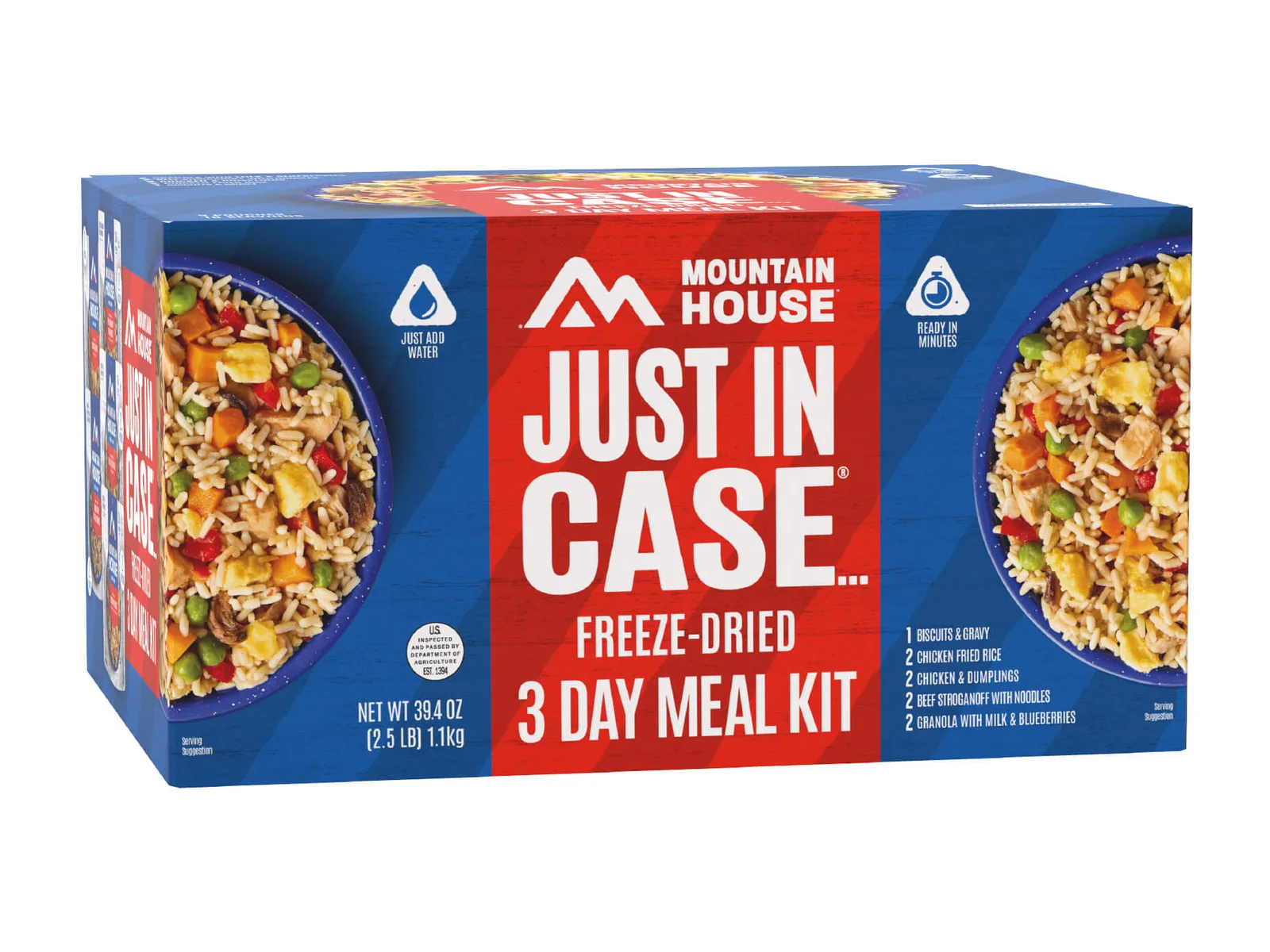
Image credits: Mountain House Just In Case 3-Day Emergency Food Supply — Mountain House.
