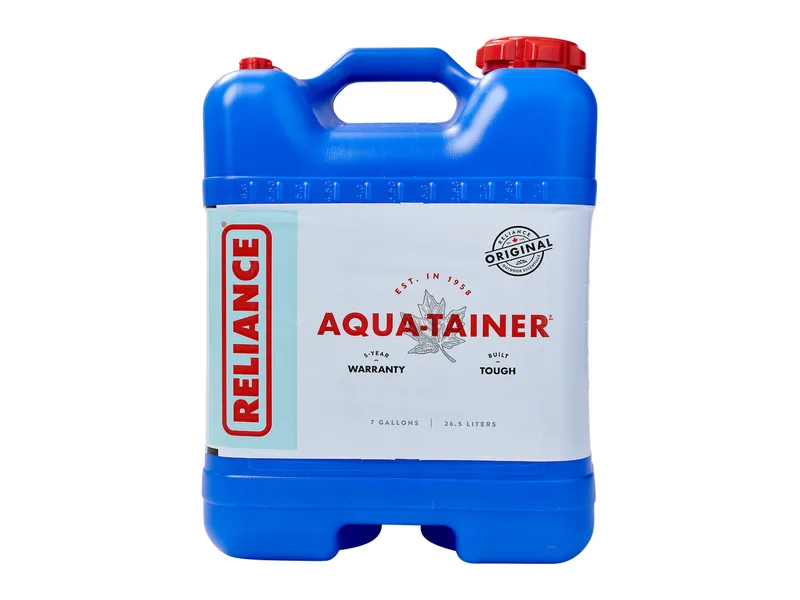
Reliance Aqua-Tainer 7-Gallon Water Container
A rigid seven-gallon container for a planned reserve. Decide where it will stand and how you will dispense water before filling it.

Keep your 72-hour kit and add 11 more days of usable supplies for staying home. Start with 14 gallons of water per person, then plan food, light, charging, health, sanitation and documents around your household.
We may earn a commission when you buy through our links. As an Amazon Associate I earn from qualifying purchases. Affiliate disclosure
People × 14 days × 1 gallon gives your baseline. Subtract safe water already stored; add extra needs separately. Empty containers and filters do not count as stored water.
For four people, a complete three-day reserve is 12 gallons; moving to 14 days adds 44 gallons. The result measures volume, not water safety. Values are not saved or sent.
A home reserve can stay heavy; a travel bag needs to be manageable. Use the car go-bag checklist to separate reachable cabin supplies, shared trunk equipment and items that leave with you.
Use the 72-hour kit checklist as your foundation. Keep useful gear and expand the consumables it depends on. This is a home reserve: keep your evacuation supplies reachable and follow local instructions if staying home becomes unsafe.
CDC recommends at least one gallon per person per day and suggests storing two weeks if possible. The water figures below follow that guidance. Other quantities are our planning worksheet, not FEMA requirements: food, batteries, hygiene and care needs vary. Shared equipment is labeled separately so you do not buy one per person unnecessarily.
| Category | 72 hours · per person unless shared | 14 days · per person unless shared | What to add |
|---|---|---|---|
| Water | 3 gallons baseline | 14 gallons baseline | 11 gallons per person, plus extra needs |
| Food | 3 days of actual portions; 9 meal slots if eating 3 meals/day | 14 days; 42 meal slots at that same schedule | 11 days; 33 meal slots, with portions and nutrition checked individually |
| Light and charging | 1 personal light as a starting allocation; power for 3 days of chosen use | Keep the light; plan batteries and recharge for 14 days of chosen use | 11 days of measured usage; shared room light and charging equipment by household |
| Health | 3-day personal care plan; 1 checked first-aid kit shared by household | 14-day continuity plan per person; replenish the shared kit as needed | Review the extra 11 days with your pharmacist or care team; do not change doses |
| Sanitation | 3 days of each person's normal hygiene use | 14 days of actual use per person; shared cleaning and waste plan | 11 days of toilet paper, soap and other personal supplies |
| Documents | 1 protected information set per person, plus household contacts | Keep 1 current set per person and an offline household copy | Update details and access; no need for 14 copies |
Meal slots count eating occasions, not package servings or a universal calorie target. Count snacks, infant food, pet food and preparation needs separately. Battery coverage requires your devices, modes and a workable recharge plan; no product below promises 14 days of runtime.
Mark “Have” only when the quantity, condition and location work for your household. Mark “Need” for a gap, then use the printed copy to record quantities and the next action. Choices are not saved or sent; print before leaving.
People: ____ · Water baseline: ____ gal · Safe water stored: ____ gal · Extra needs: ____ gal
Owner: ____________________ · Checked on: __________ · Next monthly check: __________
Count portions for each person; include ready-to-eat options and check preparation water separately.
Two seven-gallon containers have a nominal 14-gallon capacity; they count toward one person’s baseline only when filled with safe water. Choose sizes your household can dispense without unsafe lifting. Our emergency water kit checklist covers containers, treatment limits and handling.
A rigid seven-gallon container for a planned reserve. Decide where it will stand and how you will dispense water before filling it.
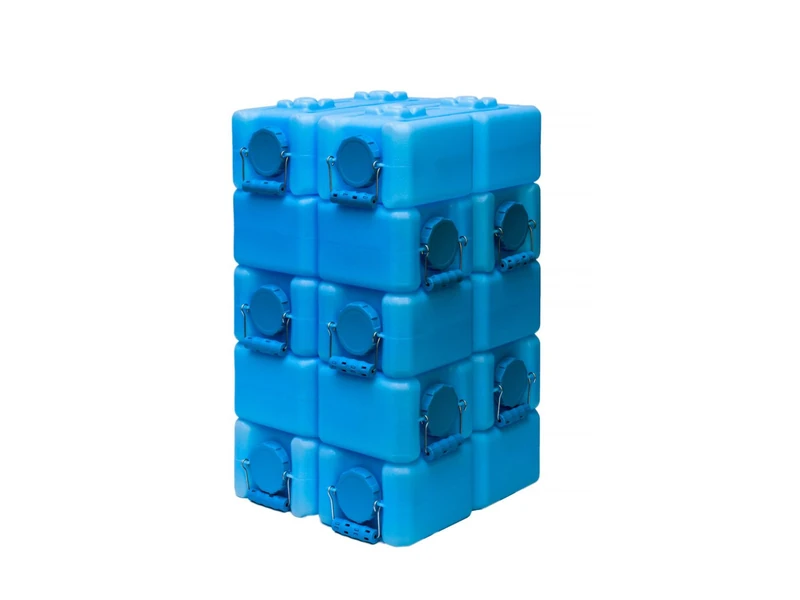
Modular containers when smaller units suit your space. Check dispensing accessories separately; the official stacking photo does not show the six-pack contents.
Add water for heat, pets and individual needs. Account for meal preparation within your plan and add capacity where necessary. CDC advises replacing home-filled water every six months; follow expiration dates on commercial bottles. A filter cannot substitute for water already stored.
Start with familiar shelf-stable food that fits each person’s dietary needs. Count actual portions across 14 days; a bucket’s serving count or name does not establish coverage. Keep ready-to-eat choices for times when water, heat or cleanup is limited. Use our long-term emergency food storage guide to record preparation needs and rotate supplies.
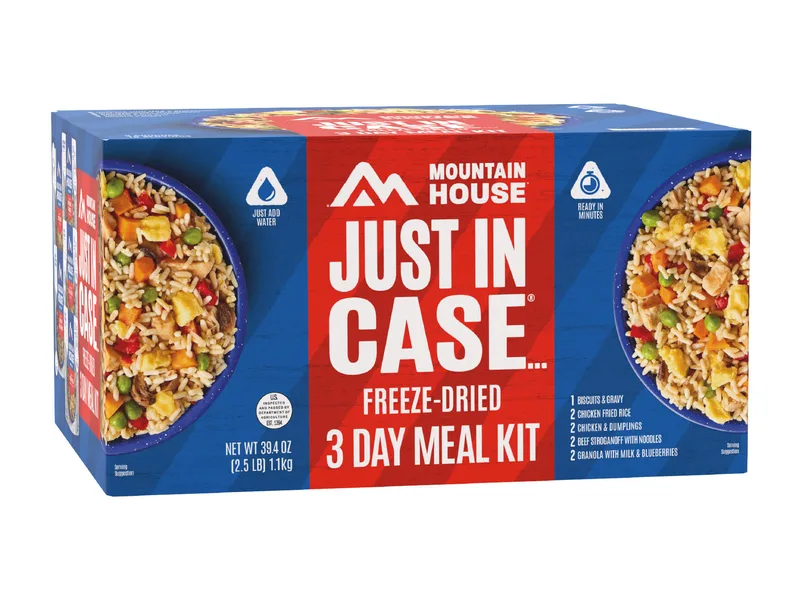
An existing packaged-food option to compare with your pantry plan. Its three-day label does not establish two-week coverage; check current contents, portions, dietary fit and preparation directions.
If a packaged reserve fills a specific gap, compare the two My Patriot Supply destinations below. Confirm current contents, portion sizes, allergens, preparation water, heat and storage directions at the store. The product title and URL do not establish your family’s calorie needs or four weeks of coverage. Not taste-tested.
Emergency Food Kits collection · Check price at My Patriot Supply
4-Week Emergency Food Supply · Check price at My Patriot Supply
Skip another food kit when your maintained pantry already covers the plan. Use USDA’s shelf-stable food guidance and each package’s handling directions; do not assign one shelf life to everything.
Allocate a personal light for moving around and shared light where household tasks happen. These are alternatives by role; you do not need every model. Check battery types, operating modes and label instructions before estimating replacement batteries or charging frequency. The power-outage kit checklist helps you choose tasks and loads before sizing backup power.
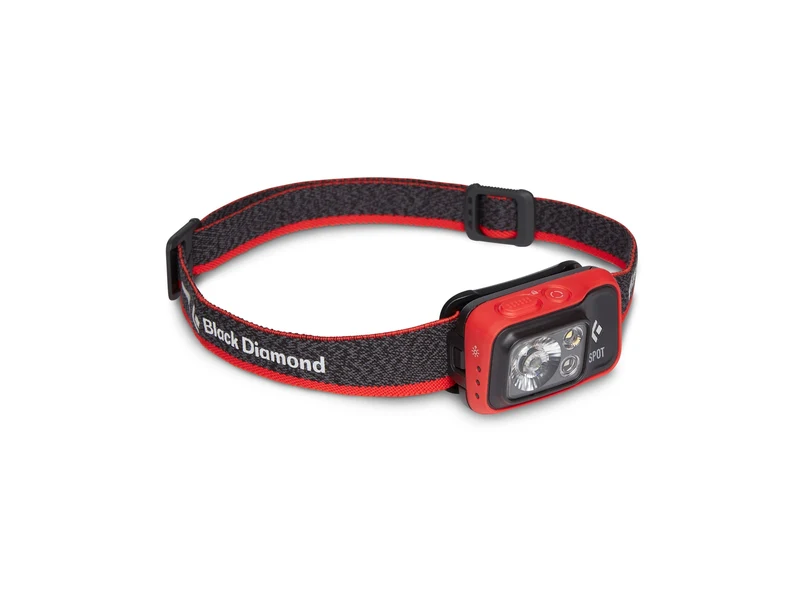
A hands-free light option for individual tasks. Plan compatible batteries or charging accessories around the exact version you own or order.
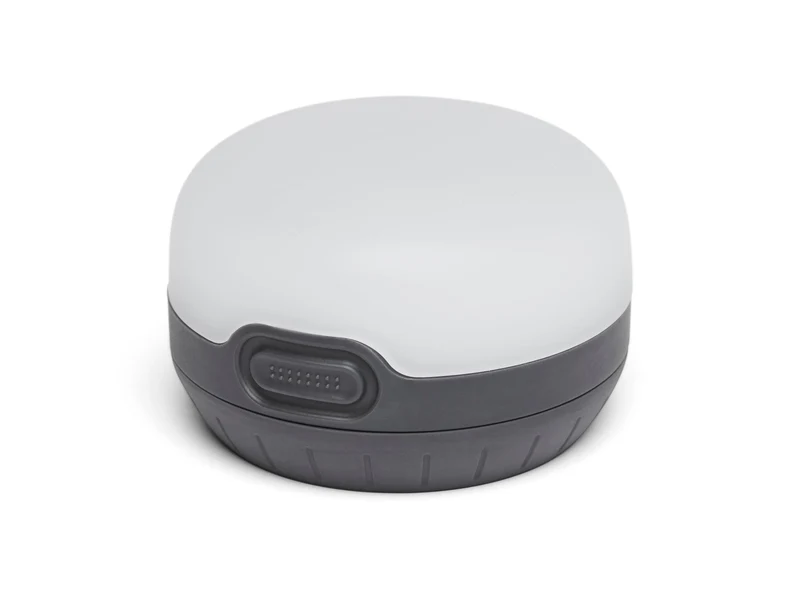
A compact shared-light option. Check the exact battery configuration and keep replacement power accessible with the light.
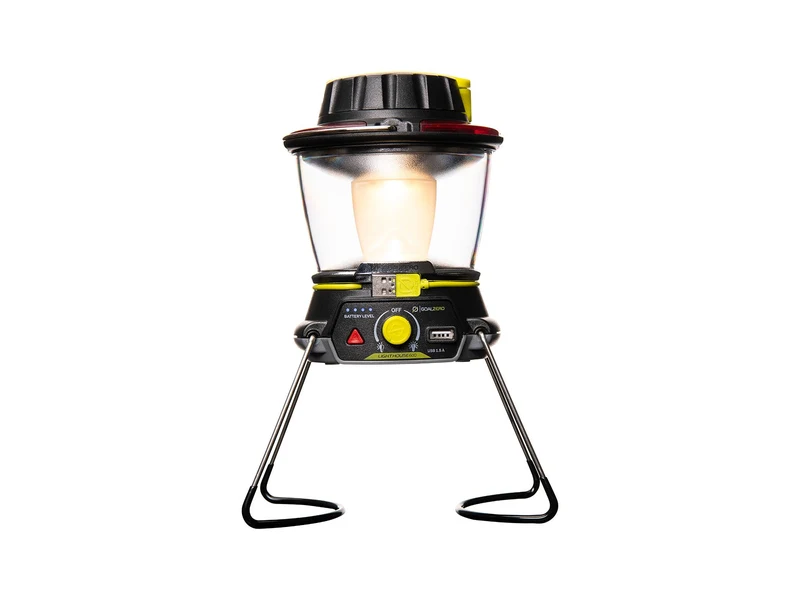
An alternative shared lantern when recharge access fits your plan. Treat its USB output as an option to check, not a guarantee of phone coverage for two weeks.
Inventory charged power banks, compatible cables and the phone use you actually need. Recharging from unavailable wall power is not a plan. Try a normal day of essential use and record the energy consumed; expand the recharge plan for the remaining days. Do not count a radio, lantern or power station battery twice across different jobs.
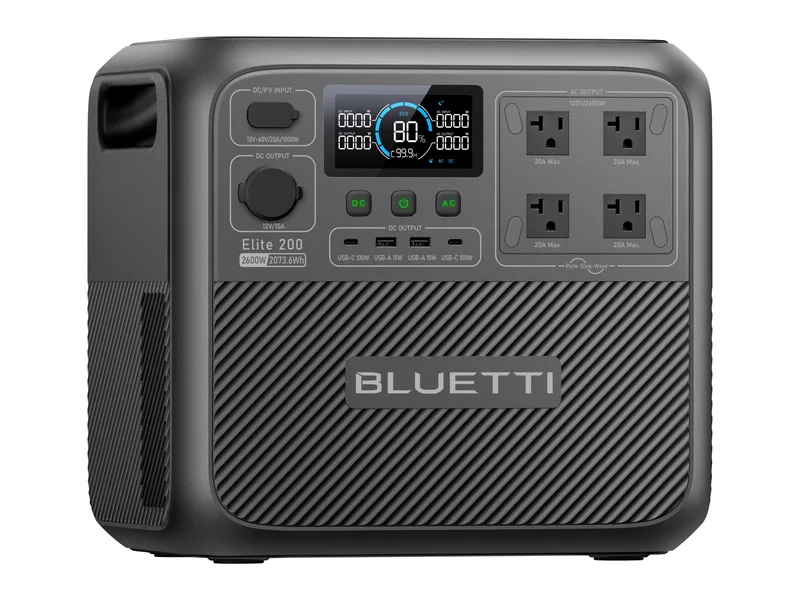
Optional shared backup for selected loads, after checking energy needs, continuous power, starting surge and a feasible recharge source. It is not a promise of 14-day backup or a medical-device solution.
Keep manufacturer safety clearances and instructions. Never run a fuel-burning generator or outdoor cooking appliance inside a home or garage.
Write down medications, care contacts and medical-device dependencies for each person. Ask your pharmacist or care team about a lawful, practical continuity plan; refill rules, safe storage and refrigeration can limit what you can keep. Do not change doses or substitute equipment based on a checklist.
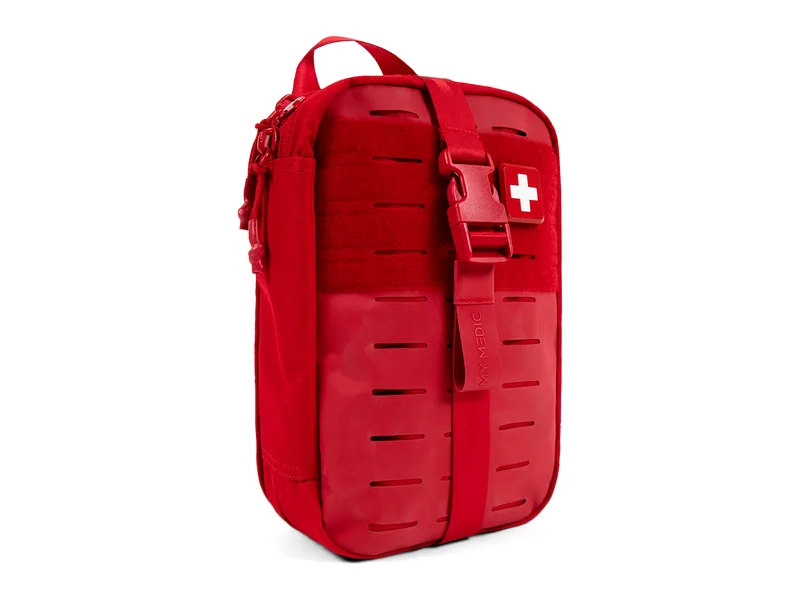
A shared first-aid organizer to evaluate against supplies and knowledge you already have. Check the exact variant, contents and expiration dates; buying a kit does not provide training.
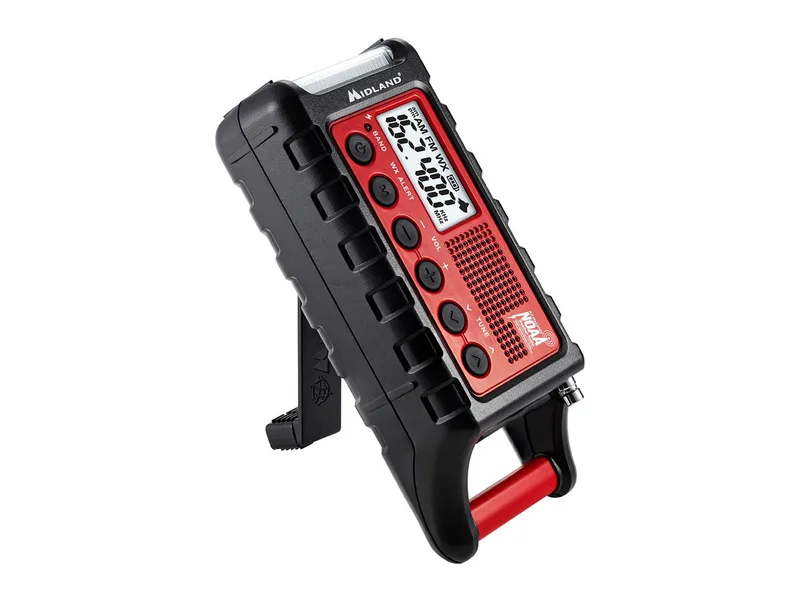
A shared weather-information option. Check local reception, alert setup and backup power before relying on it; the crank is a backup, not an unlimited power source.
Keep local alerts and an offline contact sheet available. Make a separate plan for anyone needing temperature-controlled medicine, continuous powered care or help leaving home.
Keep evacuation supplies separate and reachable. A home reserve can include heavy containers and shared equipment that would be impractical to carry. Follow official evacuation instructions when they apply.
Buy one only if it fills a defined load and recharge gap. A larger battery still runs down. Personal lights, charged banks and a realistic recharge plan may cover your chosen tasks without a power station.
It is a baseline at one gallon per day for 14 days. Add for individual needs, pets, heat and your preparation plan. Stored quantity alone does not establish water safety.
Updated Oct 16, 2026: Added the 72-hour-to-14-day comparison, water-gap calculator, printable have-or-need inventory and monthly rotation routine. Equipment roles use existing catalog records; check the current model, bundle and instructions before purchasing.
Image credits: Reliance Aqua-Tainer 7-Gallon Water Container — Reliance Products · WaterBrick 3.5-Gallon Stackable Water Storage Containers (6-pack) — WaterBrick International · Mountain House Just In Case 3-Day Emergency Food Supply — Mountain House · Black Diamond Spot 400 Headlamp — Black Diamond · Black Diamond Moji Lantern — Black Diamond · Goal Zero Lighthouse 600 Lantern & USB Power Hub — Goal Zero · BLUETTI Elite 200 V2 — BLUETTI · Midland ER310 Emergency Crank Weather Radio — Midland · My Medic MyFAK Standard First Aid Kit — My Medic.
