
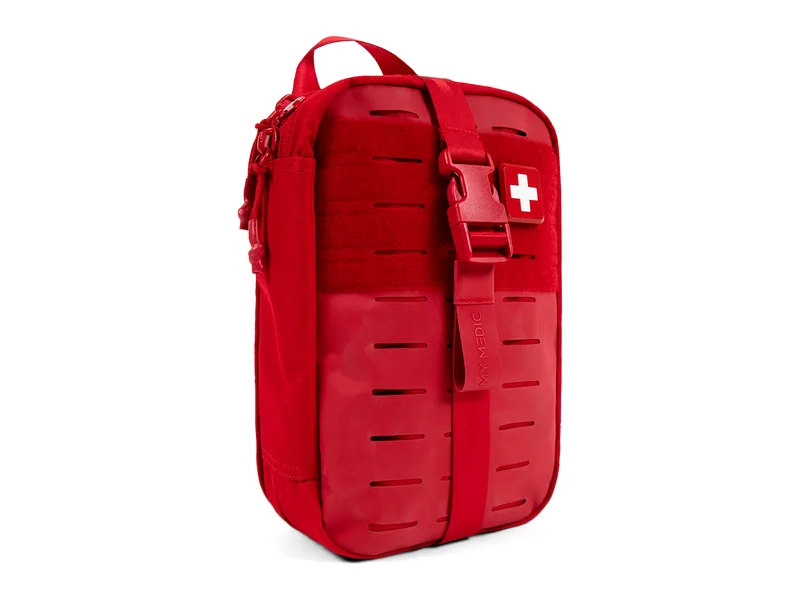
My Medic MyFAK Standard First Aid Kit
A first aid kit organized like a binder, so you find things fast.
Start with supplies for everyday first aid, emergency contacts and the needs of your household. Check what is already usable before buying a prepacked kit. Training and a plan to obtain help matter as much as the pouch.
We may earn a commission when you buy through our links. As an Amazon Associate I earn from qualifying purchases. Affiliate disclosure
Open the kit and compare its contents with the American Red Cross checklist. You may be missing a few replacements rather than an entire new kit. Look for items that have been used, packaging that is damaged and expiration dates that have passed.
Keep emergency contact information with the supplies. Add personal items your healthcare provider recommends, following their storage and use instructions. A generic list cannot decide which medicine is appropriate for an individual.
| Category | Items to review |
|---|---|
| Minor wound supplies | Adhesive bandages, suitable dressings, gauze and tape. |
| Protection and cleanup | Nonlatex gloves and appropriate packaged cleaning supplies. |
| Basic equipment | Tweezers, thermometer and the tools appropriate to your kit. |
| Comfort and protection | Emergency blanket and an instant cold compress where appropriate. |
| Instructions and contacts | First-aid guidance, emergency numbers and relevant personal information. |
These are categories to check against the full Red Cross list, not treatment instructions or a guarantee that a kit is complete. Choose quantities for the people and places the kit serves. Keep supplies arranged so someone can find them without dumping the pouch onto the floor.
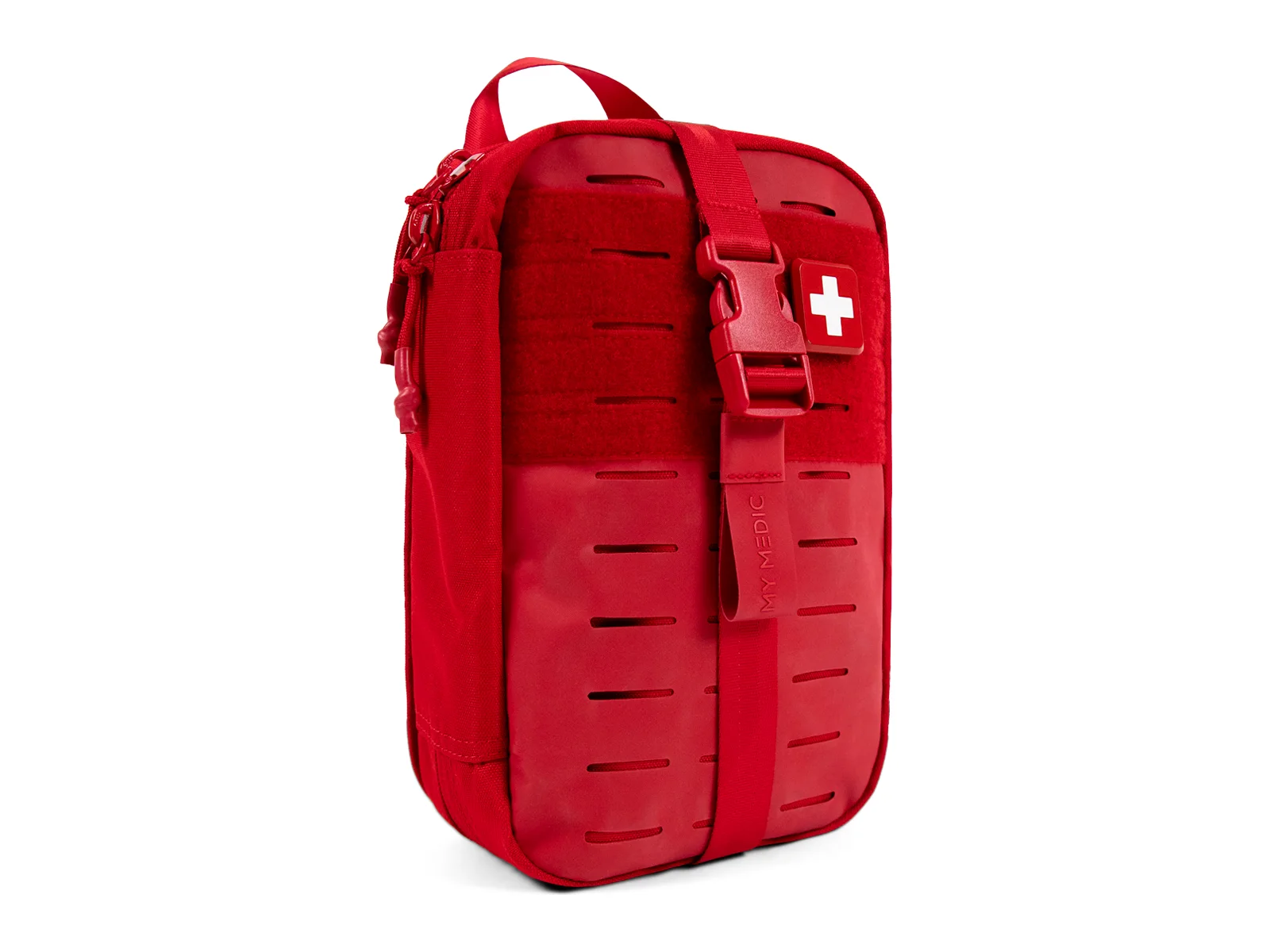
A My Medic MyFAK Standard is an existing option for someone who wants an organized pouch and will maintain it. My Medic offers different Standard and Pro configurations. Check the exact contents and variant at the destination; a shared name or photo does not prove you are buying the same configuration.
Skip a large prepacked kit when you already have suitable supplies, a usable container and a maintenance routine. Buy replacements for actual gaps. Choose a smaller arrangement if a bulky kit would stay at home when you need to carry it.
A household first-aid kit and a trauma kit are different purchasing decisions. Our trauma-kit guide covers that separate category. Specialized equipment requires appropriate training; buying it does not establish that someone knows when or how to use it. This article does not give clinical procedures.
The Red Cross recommends checking kits and replacing used or expired contents. Choose a reminder that you will actually follow, and check again after the kit has been used or exposed to unsuitable storage conditions.
Include first-aid training in the plan. Keep the household kit accessible to responsible users and handle medicines and sharps according to their labels and household needs. For a serious or uncertain situation, seek appropriate emergency help rather than using a shopping list as medical advice.
Assess the container and each item. An intact pouch does not extend the expiration of its contents; replacing a few supplies may be enough if the container still works.
The needs overlap, but access and storage conditions differ. Use the winter car checklist for the travel plan and the 72-hour household kit for the home reserve.
A first aid kit organized like a binder, so you find things fast.
Image credits: My Medic MyFAK Standard First Aid Kit — My Medic.