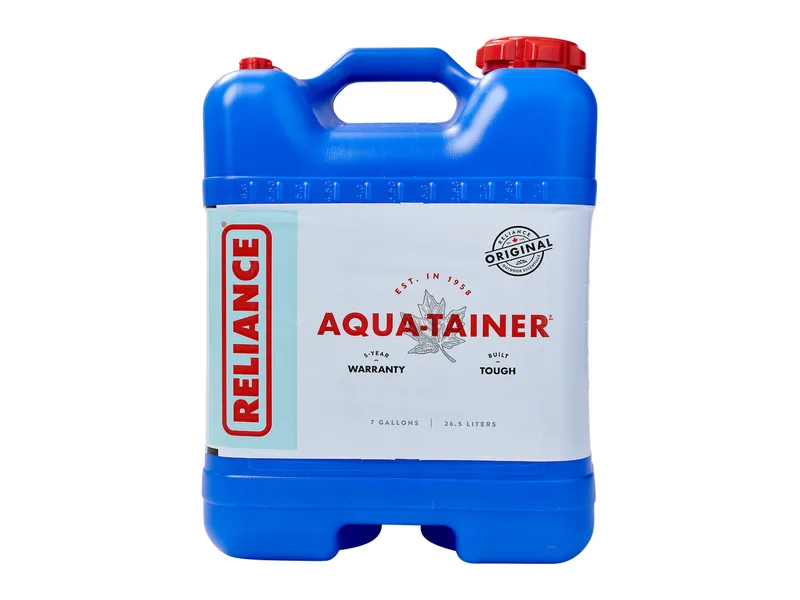
Reliance Aqua-Tainer 7-Gallon Water Container
A rigid seven-gallon jug with a spigot; plan dispensing because a full jug is heavy.

Start with at least one gallon per person per day, then add water for your household’s needs. Count what you already store before choosing containers, treatment or carry gear.
We may earn a commission when you buy through our links. As an Amazon Associate I earn from qualifying purchases. Affiliate disclosure
Start with your household size and planning days. People × days × 1 gallon is the baseline. Ready.gov recommends at least one gallon per person per day for several days; CDC specifies at least three days and suggests two weeks if possible.
This allowance covers drinking and sanitation; add water for pets, heat and individual needs. It does not calculate separate non-drinking household water needs.
| People | 3 days | 7 days | 14 days |
|---|---|---|---|
| 1 | 3 | 7 | 14 |
| 2 | 6 | 14 | 28 |
| 3 | 9 | 21 | 42 |
| 4 | 12 | 28 | 56 |
| 5 | 15 | 35 | 70 |
| 6 | 18 | 42 | 84 |
Once your water reserve is planned, use the two-week home supply checklist to match it with food, light, health and sanitation supplies for 14 days at home.
Walk through your reserve before shopping. Record safe water already stored, suitable containers and who can move or dispense them. Subtract the usable supply from your planning total. Empty containers do not count as stored water.
| Your record | Fill this in |
|---|---|
| People and planning days | ____ people × ____ days |
| Safe water available now | ____ gallons |
| Storage location and access | ____ |
| Remaining capacity or equipment gap | ____ |
Four people over three days starts at 12 gallons before additional needs. Four gallons already stored leaves an eight-gallon baseline gap. This arithmetic does not establish water safety.
15 items · tick them off as you pack. Checkmarks are not saved or sent, so print your list before you leave the page.
Start with known safe water and suitable containers. Our long-term water storage container guide starts with handling and available space.
A rigid seven-gallon jug with a spigot; plan dispensing because a full jug is heavy.
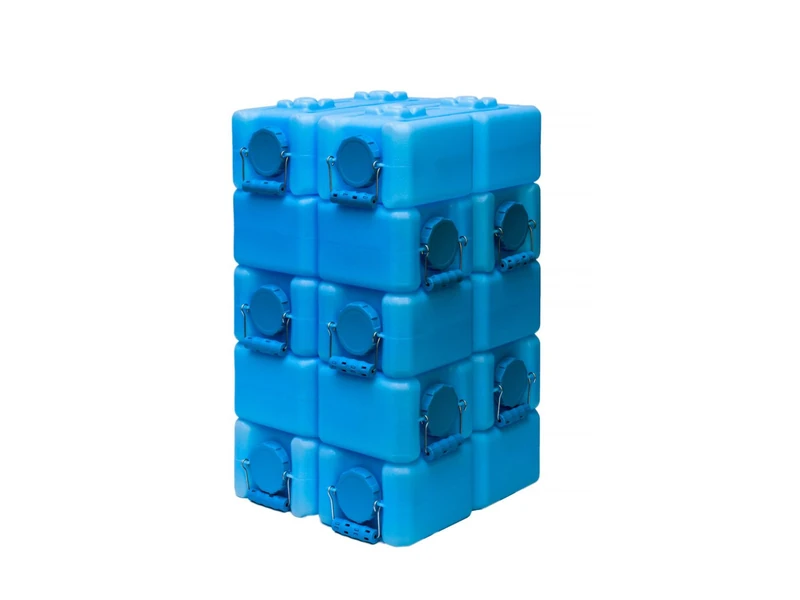
Modular 3.5-gallon containers with a separately sold spigot; the photo illustrates stacking, not the six-pack contents.
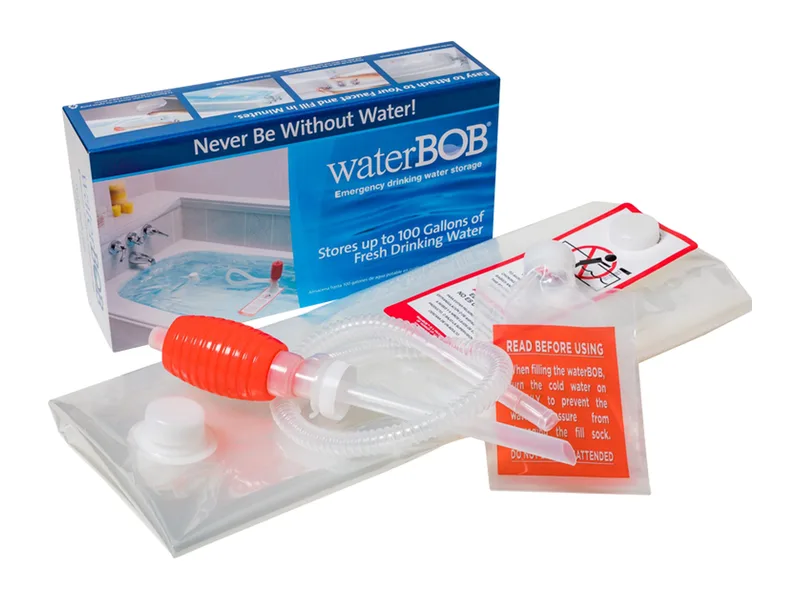
A single-use bathtub reserve to fill while tap water is safe before a forecast storm; it is not long-term storage or a filter.
Stationary bulk storage; plan the location, pump and opening tools before filling because a full barrel is not a carry container.
Dedicate dispensing and filling equipment to drinking water. Never use a pump that has handled fuel or chemicals. Check the barrel fitting and a suitable bung wrench, a separate tool with no product link here.
A manual drum siphon for dispensing drinking water; check the barrel fitting before filling.
A dedicated drinking-water fill line; keep it separate from garden equipment and protect the clean ends.
Stored safe water is the base. Follow local public-health instructions when water may be unsafe. Use CDC guidance for boiling and EPA instructions for suitable unscented household bleach. Do not improvise a dose or use scented bleach. Boiling and disinfection do not remove fuel, salts or many chemicals; use a known safe alternative when such contamination is suspected.
Portable filters are not virus purifiers and do not make fuel- or chemical-contaminated water drinkable. Compare limitations in our water filter and storage guide. Follow applicable boil-water or disinfection guidance for known or suspected microbiologically unsafe water; filtration does not override an advisory.
Portable disinfection tablets; follow the exact label, contact time and expiration because one strength does not establish a universal dose.
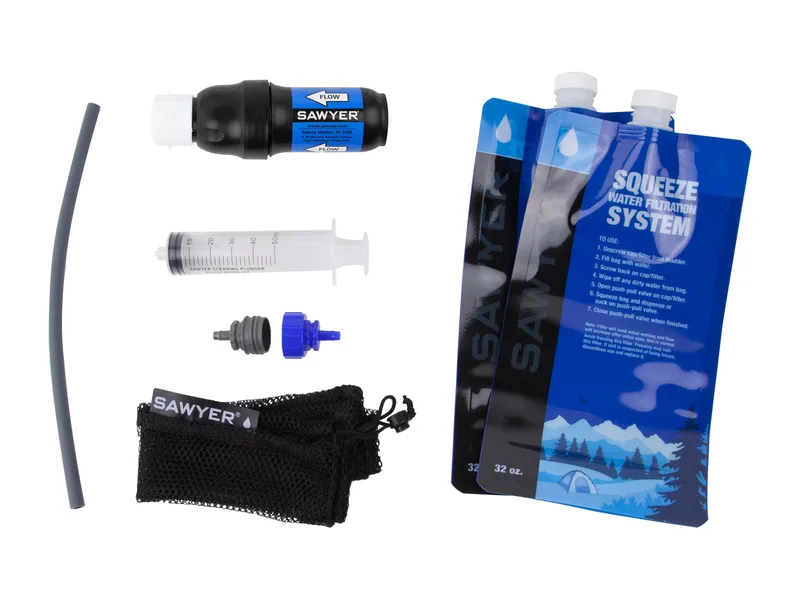
Portable freshwater filtration; it is not a virus purifier or a chemical-contamination treatment.
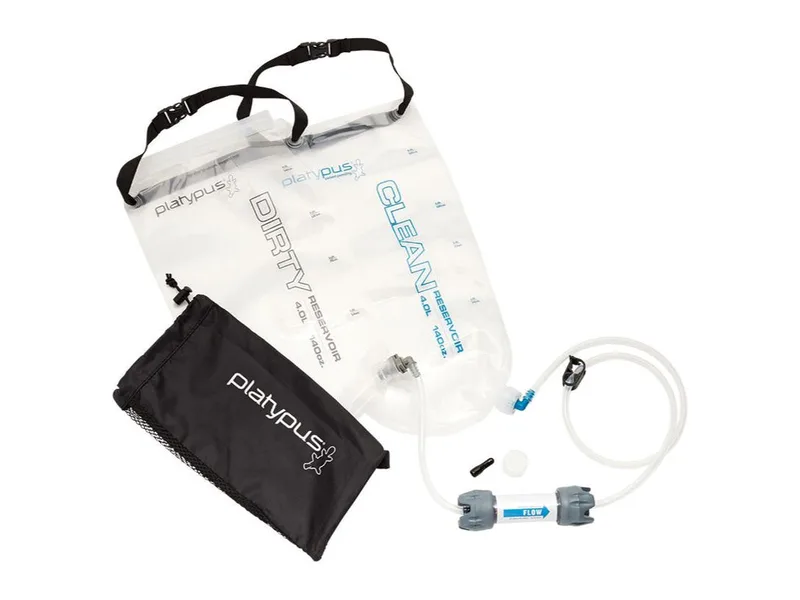
Gravity filtration where the bags can hang; it is not a virus purifier or a chemical-contamination treatment.
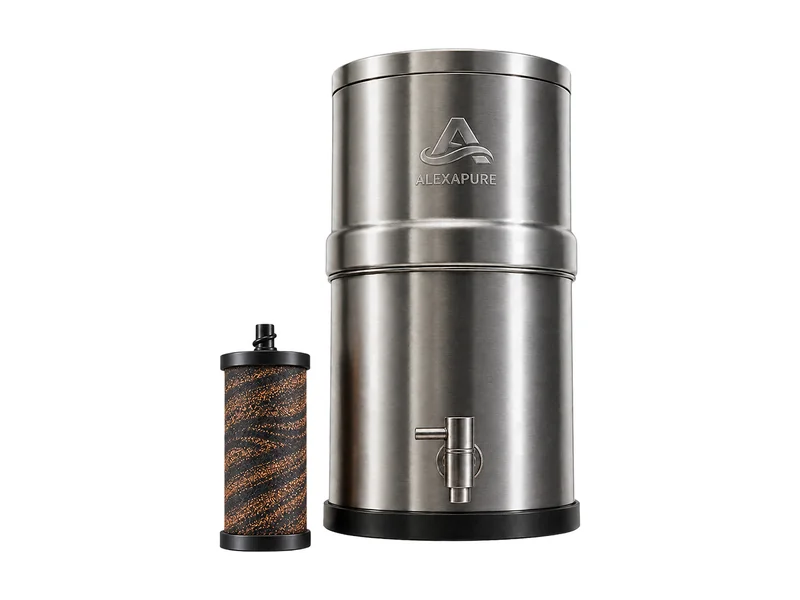
A fixed countertop gravity-filter option needing counter space, freshwater and filter replacement; always follow the applicable water advisory.
Carries already safe water without treating it; follow manufacturer restrictions on hot liquids in this single-wall bottle.
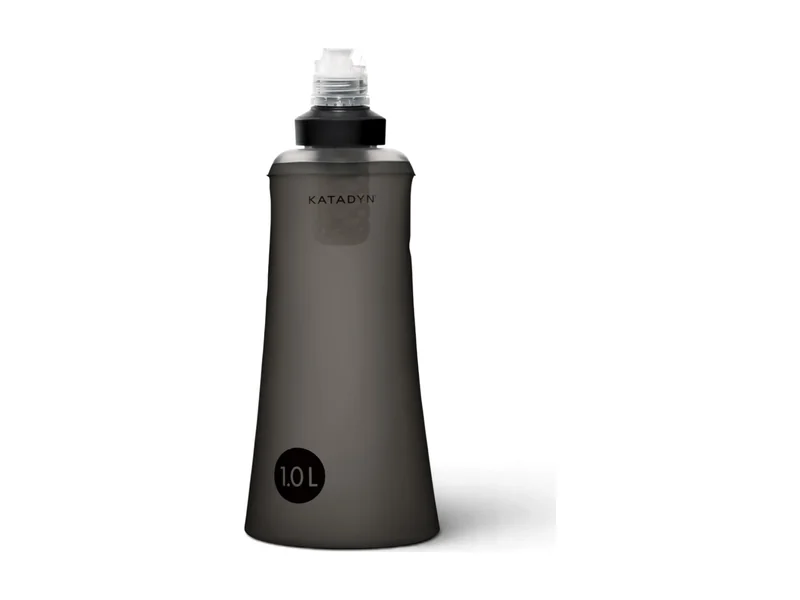
A collapsible freshwater filter bottle, pictured in Army black; it is not a virus purifier or chemical treatment.
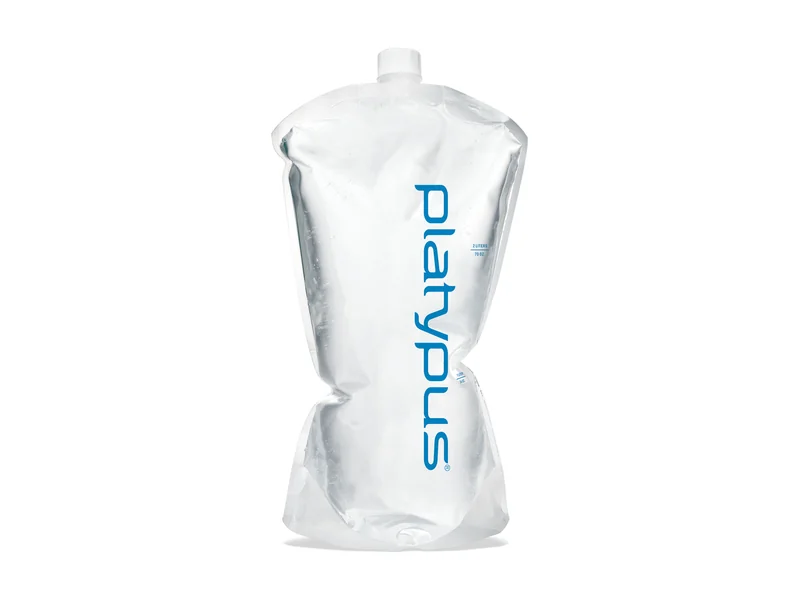
Collapsible carry capacity for safe water; it does not replace a maintained rigid home reserve.
Equipment roles use the existing catalog and sources checked Oct 15, 2026. Follow current labels and instructions. These recommendations are research-based, not lab-tested.
Label home-filled water with its identity and fill date. CDC recommends replacing it every six months. Observe expiration dates for unopened commercial bottles; keep the two approaches separate. Our store-and-rotate guide explains the routine.
Use the printable checklist and rotation record above: add a line per identifiable container or batch and update it after use or replacement. Use Print this list or your browser’s Print command. Checkmarks are not saved. Fit the water plan into your 72-hour household kit checklist.
Skip a new container when suitable existing containers and a maintained water supply cover the gap. Skip a barrel if no one can reach or dispense it where it will stand. Skip a filter that adds no distinct role. Do not reuse containers that held toxic chemicals or whose previous contents cannot be established.
No. A filter does not give you stored water, and its treatment limits still apply. Start with safe stored water and match treatment to the official advisory.
Twelve gallons is the baseline for four people over three days. Add water for individual needs, pets and heat, or choose more planning days. It is not a guarantee of coverage.
Keep home-filled and commercially bottled water separate. CDC recommends replacing home-filled water every six months; observe commercial bottle expiration dates.
Updated Oct 16, 2026: Added a household water calculator, equipment roles and a printable inventory and rotation checklist; included official photos of the Platy 2L, BeFree 1.0L in Army black and Alexapure Pro.
Image credits: waterBOB Bathtub Emergency Water Storage — waterBOB · WaterBrick 3.5-Gallon Stackable Water Storage Containers (6-pack) — WaterBrick International · Sawyer Squeeze Water Filtration System (SP129) — Sawyer · Platypus GravityWorks 4.0L Water Filter System — Platypus (Cascade Designs) · Reliance Aqua-Tainer 7-Gallon Water Container — Reliance Products · Alexapure Pro Water Filtration System — Alexapure / My Patriot Supply · Katadyn BeFree 1L Collapsible Water Filter Bottle — Katadyn · Platypus Platy 2-Liter Collapsible Water Bottle — Platypus / Cascade Designs.
