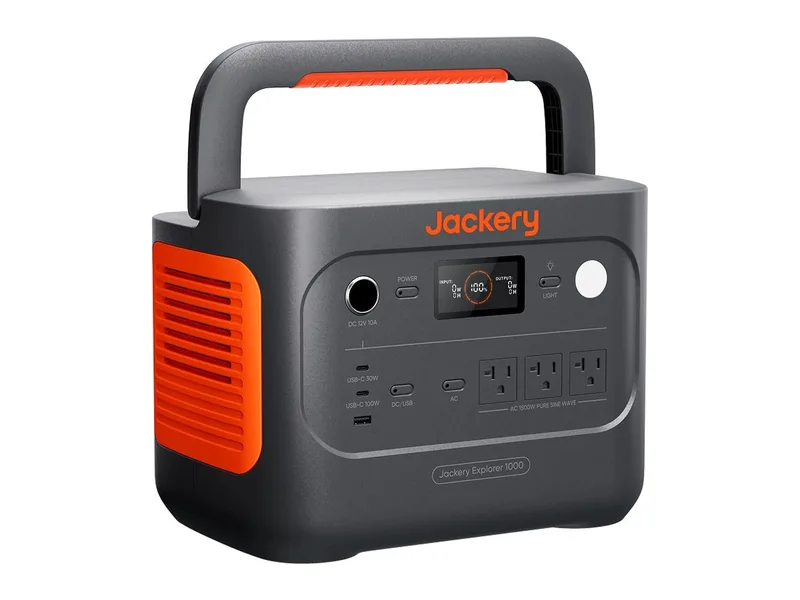
Explorer 1000 v2
Your verified energy budget fits a smaller reserve and easier carrying matters.

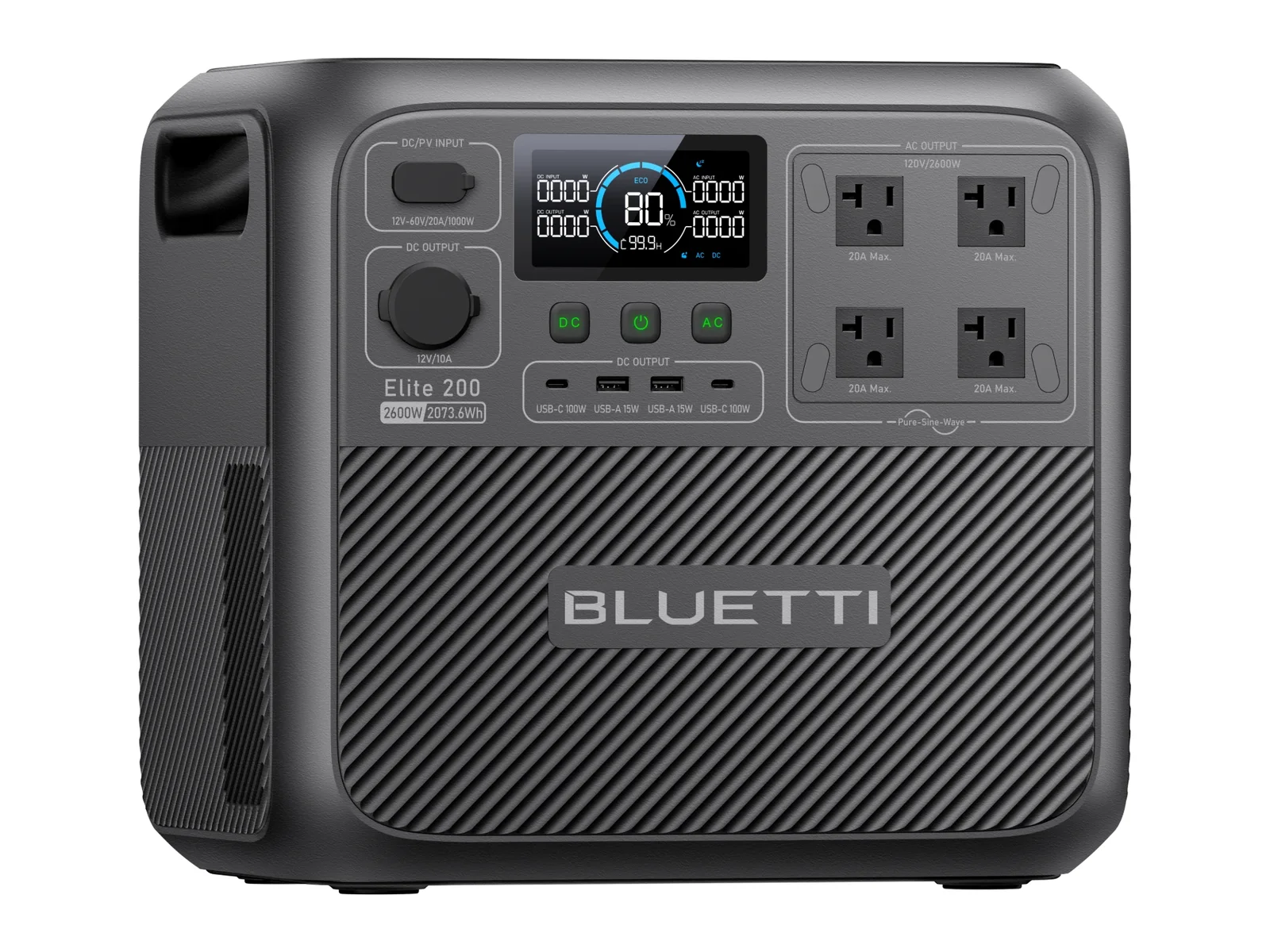
Investigate the Jackery Explorer 1000 v2 when carrying matters and your supplier confirms its reserve fits. For a stationary plan needing more rated energy, investigate the BLUETTI Elite 200 V2. These are research candidates, not verified medical backups or a number-of-nights promise.
We may earn a commission when you buy through our links. As an Amazon Associate I earn from qualifying purchases. Affiliate disclosure
Alternatives first; the recommendation for the stated use case is last.
Your verified energy budget fits a smaller reserve and easier carrying matters.
Your equipment supplier confirms the exact power arrangement and required duration, and the carrying weight fits your plan.
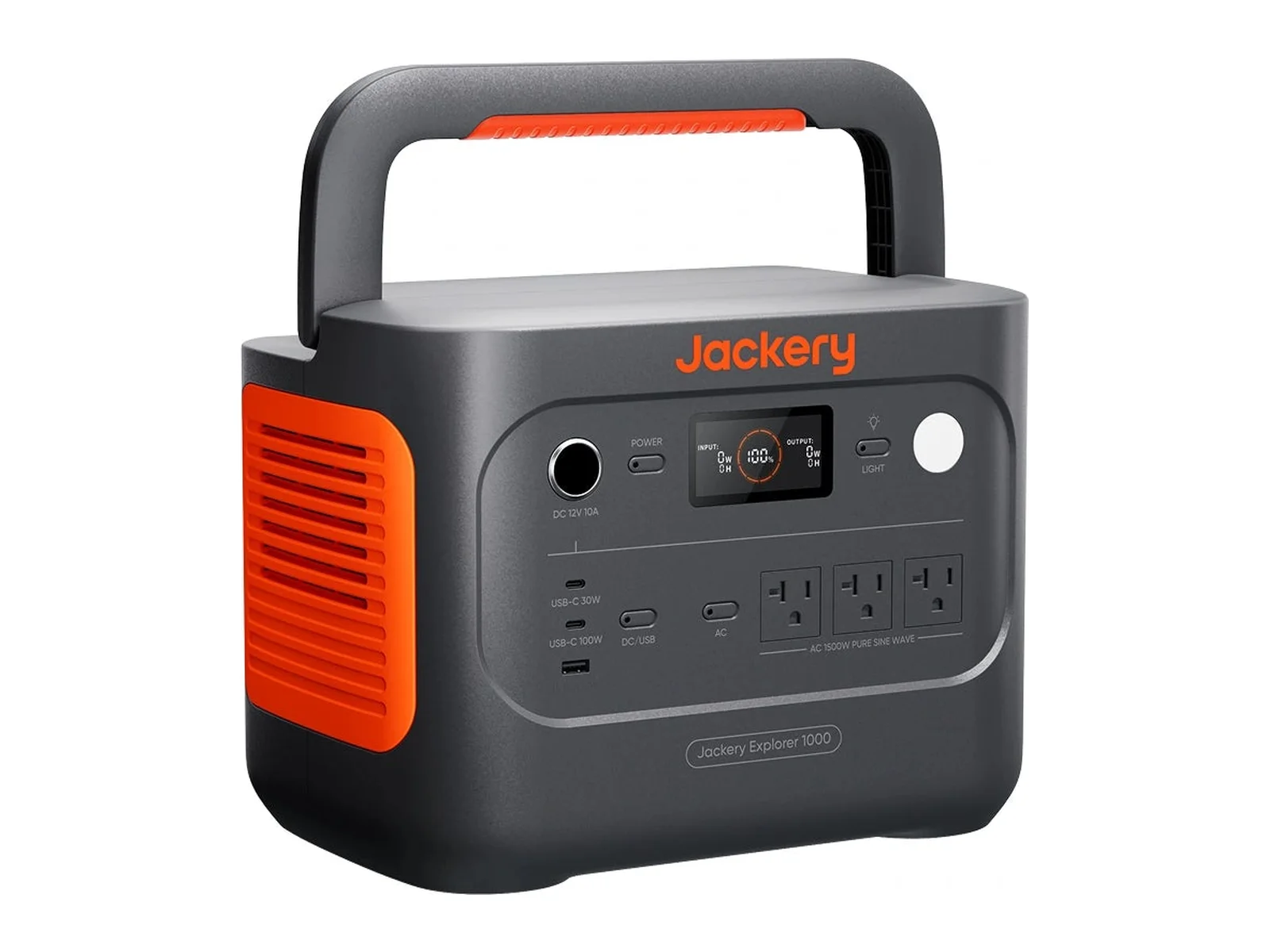
A lighter station candidate
Get it if Your verified energy budget fits a smaller reserve and easier carrying matters.
Skip it if You need 240V or more energy than the documented usable reserve.
| Capacity | 1,070Wh LiFePO4 |
|---|---|
| AC output | 1,500W continuous (3,000W surge), 3× 120V AC |
| Other ports | 2× USB-C (100W + 30W), 1× USB-A, 12V car port |
| Solar input | Up to 400W (two 8mm DC ports) |
| AC charging | About 1.7 hours by default; 1-hour emergency mode via app (Jackery) |
More reserve for a supplier-approved plan
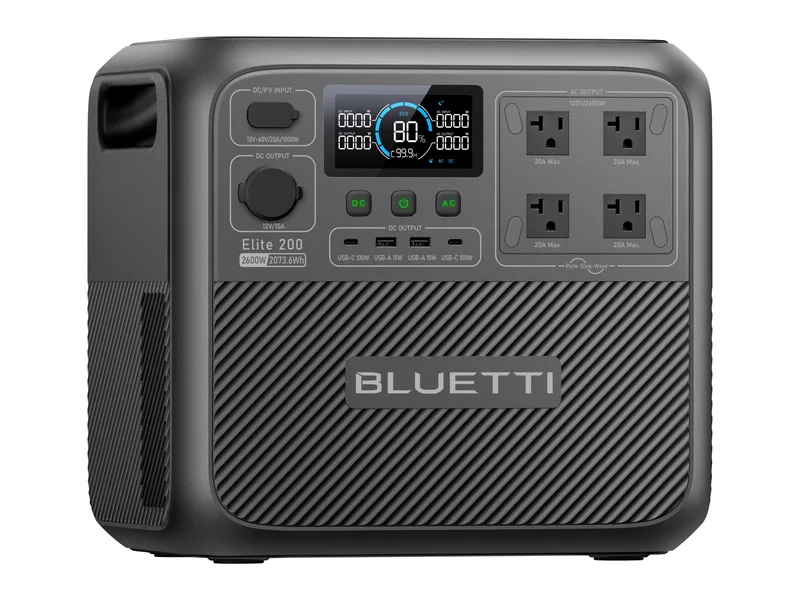
Get it if Your equipment supplier confirms the exact power arrangement and required duration, and the carrying weight fits your plan.
Skip it if You need medically certified uninterrupted support or have not confirmed device compatibility.
| Capacity | 2,073.6Wh LiFePO4 (not expandable) |
|---|---|
| AC output | 2,600W continuous, 120V · 3,900W Power Lifting for resistive loads |
| Outlets | 4× 120V AC, USB-A/USB-C, car outlet |
| Solar input | Up to 1,000W (12–60V) |
| AC charging | Up to 1,800W |
Choose two different products. Manufacturer ratings. Published energy and output do not establish appliance runtime.
| Specification | ||
|---|---|---|
| Capacity | ||
| AC output | ||
| Solar input | ||
| Weight |
| Specification | A lighter station candidateExplorer 1000 v2 | Our top pick to investigate for a stationary CPAP planElite 200 V2 |
|---|---|---|
| Capacity | 1,070Wh LiFePO4 | 2,073.6Wh LiFePO4 (not expandable) |
| AC output | 1,500W continuous (3,000W surge), 3× 120V AC | 2,600W continuous, 120V · 3,900W Power Lifting for resistive loads |
| Solar input | Up to 400W (two 8mm DC ports) | Up to 1,000W (12–60V) |
| Weight | About 23.8 lb (10.8 kg) | 53.4 lb (24.2 kg) |
Skip a purchase when you cannot confirm the exact model, preparation or connection requirements, included equipment and storage or recharge plan. A package name or headline rating does not prove household coverage.
We compared documented job fit, preparation or connection requirements, storage or energy limits, and handling and purchase contents. Manufacturer sources below support the listed specifications; our research does not establish your household's outcome.
Research-based, not lab-tested. Read our research method and match the documented requirements to your household before purchasing.
We used four documented criteria: intended appliance or device job; voltage and ordinary output requirements; stored energy and replenishment limits; and handling, cables and exact purchase contents. Manufacturer documents support specifications; they do not establish our own runtime or performance test.
This is equipment research, not clinical advice. Ask your healthcare provider and device supplier to establish a written outage plan. Follow the device manufacturer’s approved power arrangements. Do not change prescribed pressure, treatment or comfort settings to fit a battery estimate without their guidance.
The FDA planning booklet helps you record device information, contacts, backup-power questions and actions for an interruption. A consumer station is not proof of medical-device compatibility or uninterrupted operation. If continuous support is essential, get a clinician-approved solution and an assistance or relocation plan. Do not extrapolate this guide to ventilators, oxygen equipment or other life-support devices.
Research-based, not lab-tested. Selection is by carrying burden and rated energy, not a claim that either unit is medically approved. The figures below come from the linked manufacturers. Rated watt-hours do not equal energy delivered to a CPAP.
| Candidate | Rated capacity | Published continuous AC output | Why consider it | Why skip it |
|---|---|---|---|---|
| Jackery Explorer 1000 v2 | 1,070Wh | 1,500W | Lower carrying burden than the larger candidate | Supplier cannot confirm compatibility or your energy budget exceeds it |
| BLUETTI Elite 200 V2 | 2,073.6Wh | 2,600W at 120V | More stored energy for a stationary plan | 53.4 lb is impractical to move, or its power arrangements do not match your device |
Portability candidate: Jackery lists about 10.8kg for the Explorer 1000 v2 and pure-sine-wave output. Confirm the specific U.S. model, approved CPAP supply and all output limits. The station is sold separately from any CPAP-specific adapter.
Higher-capacity stationary candidate: BLUETTI’s Elite 200 V2 has more rated energy in this comparison. Its size makes it a candidate when moving the unit is secondary. That extra capacity does not certify compatibility, a number of nights or safe automatic switching. The existing BLUETTI/Amazon buttons below let you check the exact unit after your supplier confirms the plan.
Use the supplier’s estimate or observe your approved setup during normal operation. Humidification and heated tubing can change energy use. Ask the supplier how to include them; do not assume a blower-only figure covers the setup you use.
Illustrative calculation only: a hypothetical average input of 40W for eight hours uses 320Wh. If 80% of rated station energy reached the device and you retained 20% of that available energy as reserve, you would budget 320 ÷ (0.8 × 0.8) = 500Wh of rated capacity. Those percentages and the 40W draw are assumptions, not measurements or a sizing recommendation for your CPAP. Standby consumption, age, temperature and conversion losses can change the result.
Give medical equipment its own energy budget. A refrigerator or other household load sharing the station can exhaust the same reserve. Use the static sizing worksheet for the separate household loads.
Retain the manufacturer’s approved power supply. A matching-looking connector does not establish the correct voltage, current or polarity. The ResMed Air11 converter guide describes a converter specifically for Air11 devices and suitable 12V or 24V DC sources. It is not a universal CPAP or USB cable. Have your supplier verify the complete station-to-converter-to-device arrangement.
A station’s UPS or pass-through description does not prove uninterrupted therapy. Confirm switching tolerance, low-load shutoff behavior, alarms and charging arrangements with both suppliers. Rehearse the approved plan while power is available, and keep written contacts accessible.
Capacity alone cannot answer that. You need the actual setup’s energy use, conversion losses, reserve and recharge plan. This guide does not publish a verified CPAP runtime for either candidate.
Use only a power arrangement approved for your exact device. Do not improvise a USB conversion cable or assume a phone battery supports medical equipment.
No. The image identifies the pictured product. Confirm exact device requirements, connections and the recharge plan independently before relying on the setup.
Updated Oct 14, 2026: compared the two station candidates by carrying needs and a supplier-approved backup plan, with device and runtime limits kept explicit.
Image credits: Jackery Explorer 1000 v2 — Jackery · BLUETTI Elite 200 V2 — BLUETTI.
