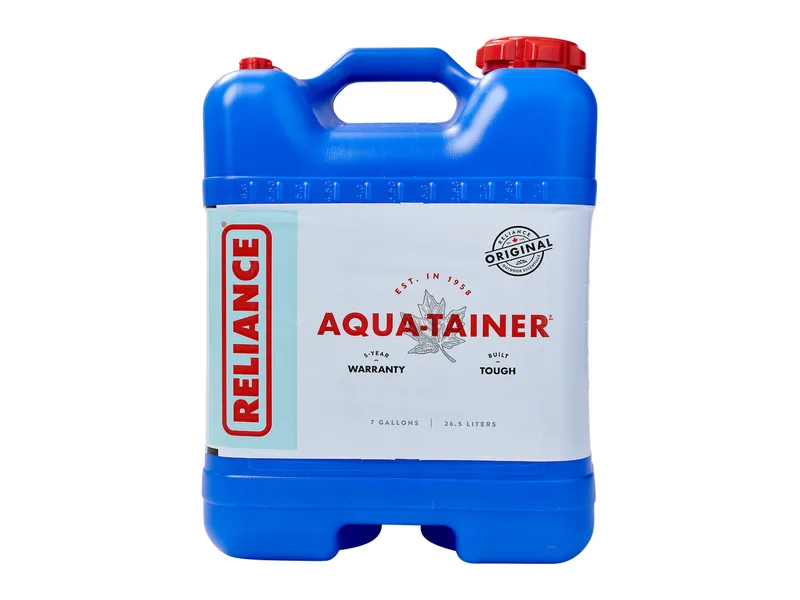
Reliance Aqua-Tainer 7-Gallon Water Container
Seven gallons, a spigot, and a handle. The boring hero of water storage.

Choose a container suitable for drinking water that you can fill, inspect and dispense safely. Start with access and handling; then choose capacity. A large container is a poor fit if you cannot use it during an outage.
We may earn a commission when you buy through our links. As an Amazon Associate I earn from qualifying purchases. Affiliate disclosure
A water reserve needs a usable dispensing point. Before buying, identify where you will fill it, where it will sit and how someone in your household will draw water. A jug that is manageable empty can become difficult to move after filling.
For a small home, several manageable containers can make access and inspection easier than one very large reserve. That is a practical layout choice, not a claim that a particular container makes water safer. Measure shelf depth, doorway clearance and space around the spigot before choosing a size.
| Check | Why it changes the choice |
|---|---|
| Drinking-water suitability | Storage material must be appropriate for the intended contents. |
| Cap, vent and spigot | You need a reliable closure and a way to dispense without handling the stored water. |
| Full-container handling | The person who will use it must be able to reach and operate it safely. |
| Storage position | Check the manufacturer’s instructions rather than assuming filled jugs can be stacked. |
| Cleaning access | You need to follow the container’s care instructions and inspect it. |
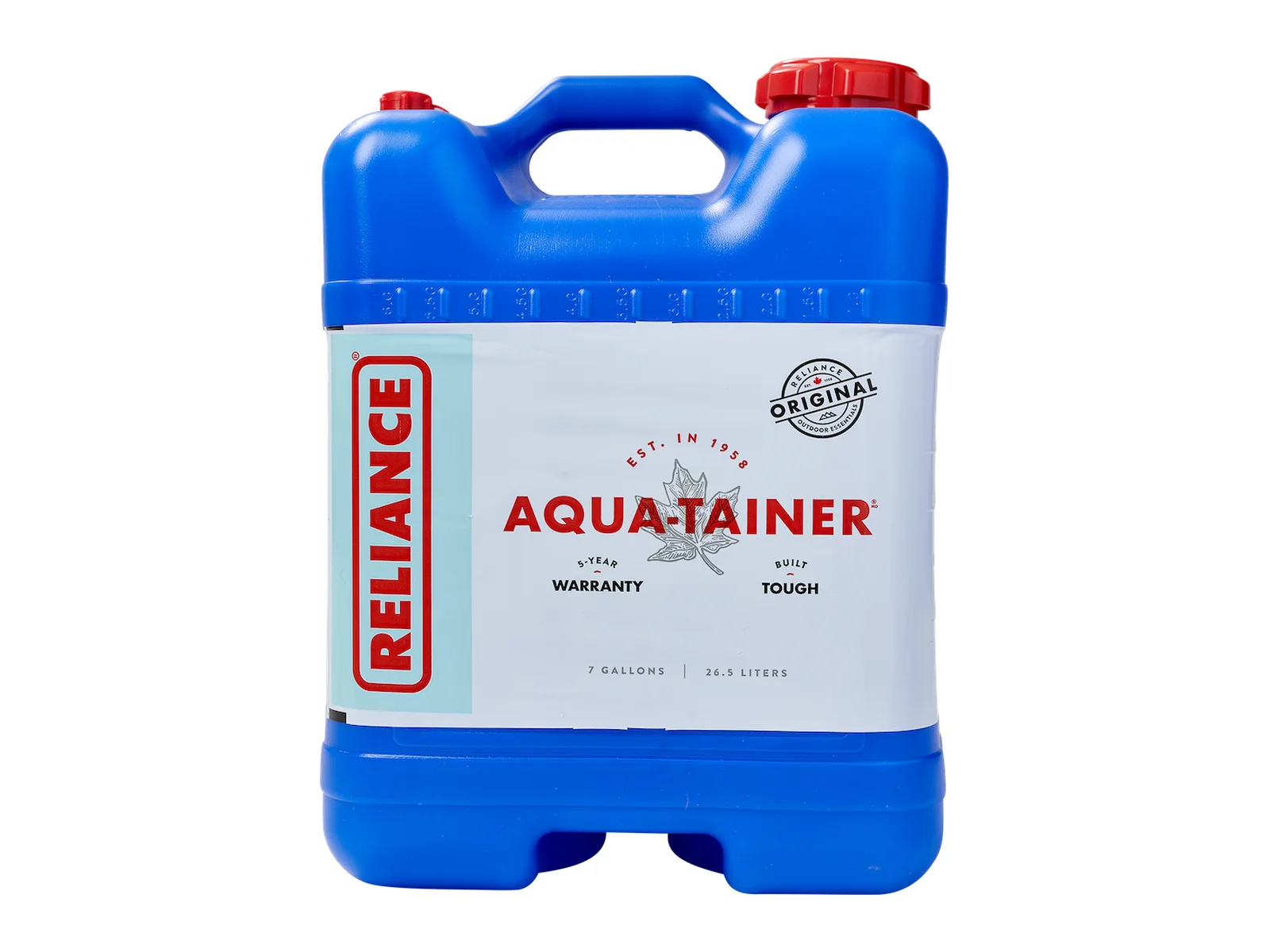
Reliance lists 4-gallon and 7-gallon Aqua-Tainers with a handle, vent and reversible spigot. The product in our catalog is the 7-gallon version. Check the listing’s exact size before ordering; a shared manufacturer page includes both.
Reliance describes stacking when empty. Do not use that description as permission to stack filled jugs. Choose a smaller size or another suitable container if the full 7-gallon version is awkward for the person who will use it. The spigot is useful only if it remains reachable in your chosen storage position.
A bathtub liner serves a different role: filling a reserve before a disruption. Do not treat it as interchangeable with a routinely maintained long-term jug. Our water equipment guide explains those different jobs without presenting storage as treatment.
CDC guidance favors food-grade water storage containers and warns against reusing containers that held toxic chemicals. Follow its cleaning and storage guidance and the manufacturer’s care instructions. A tough-looking container is not evidence of drinking-water suitability.
Replacing home-filled stored water and replacing the container are separate decisions. A durable jug does not automatically create a multi-year water-storage guarantee. Use our storage and rotation guide to organize dates, inspection and replacement reminders.
No. The Aqua-Tainer stores and dispenses water; it does not remove contaminants. Follow the official advisory if the supply is unsafe, and choose treatment equipment for its documented limitations.
Only if you can fill, inspect and dispense it in that location. Start with the household kit, then expand a reserve you can actually maintain.
Seven gallons, a spigot, and a handle. The boring hero of water storage.
Image credits: Reliance Aqua-Tainer 7-Gallon Water Container — Reliance Products.
