
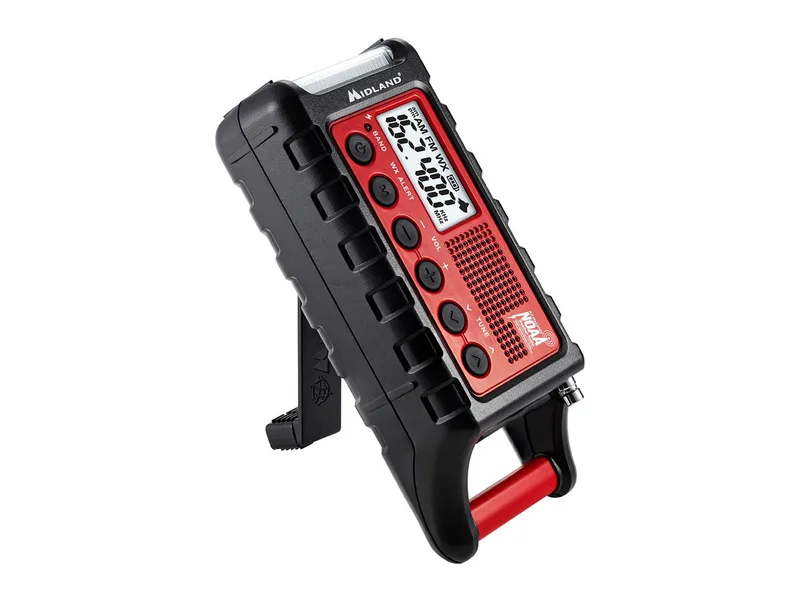
Midland ER310 Emergency Crank Weather Radio
NOAA alerts, AM/FM, a flashlight and a phone charger that you can crank.
A weather radio receives official broadcasts. A two-way radio lets compatible users communicate with one another. Plan for both receiving instructions and contacting your household; one function does not automatically provide the other.
We may earn a commission when you buy through our links. As an Amazon Associate I earn from qualifying purchases. Affiliate disclosure
NOAA Weather Radio broadcasts weather and hazard information from the National Weather Service. A receiver can help you obtain instructions without using a phone’s data connection. It does not give you a way to speak back to the broadcaster.
Two-way radios are for communication with another equipped person or an available compatible radio system. Buying one handset does not establish who will answer, what coverage you will have or whether a person at a distant location can hear you.
| Your goal | What to check |
|---|---|
| Hear official local warnings | NOAA reception, alert behavior and backup power. |
| Limit alerts to selected areas | Actual SAME support and correct local programming. |
| Speak with household members | Compatible radios, lawful operation and an agreed plan. |
| Call for urgent help | Existing emergency-service channels and other ways to seek help; do not presume someone monitors your radio. |
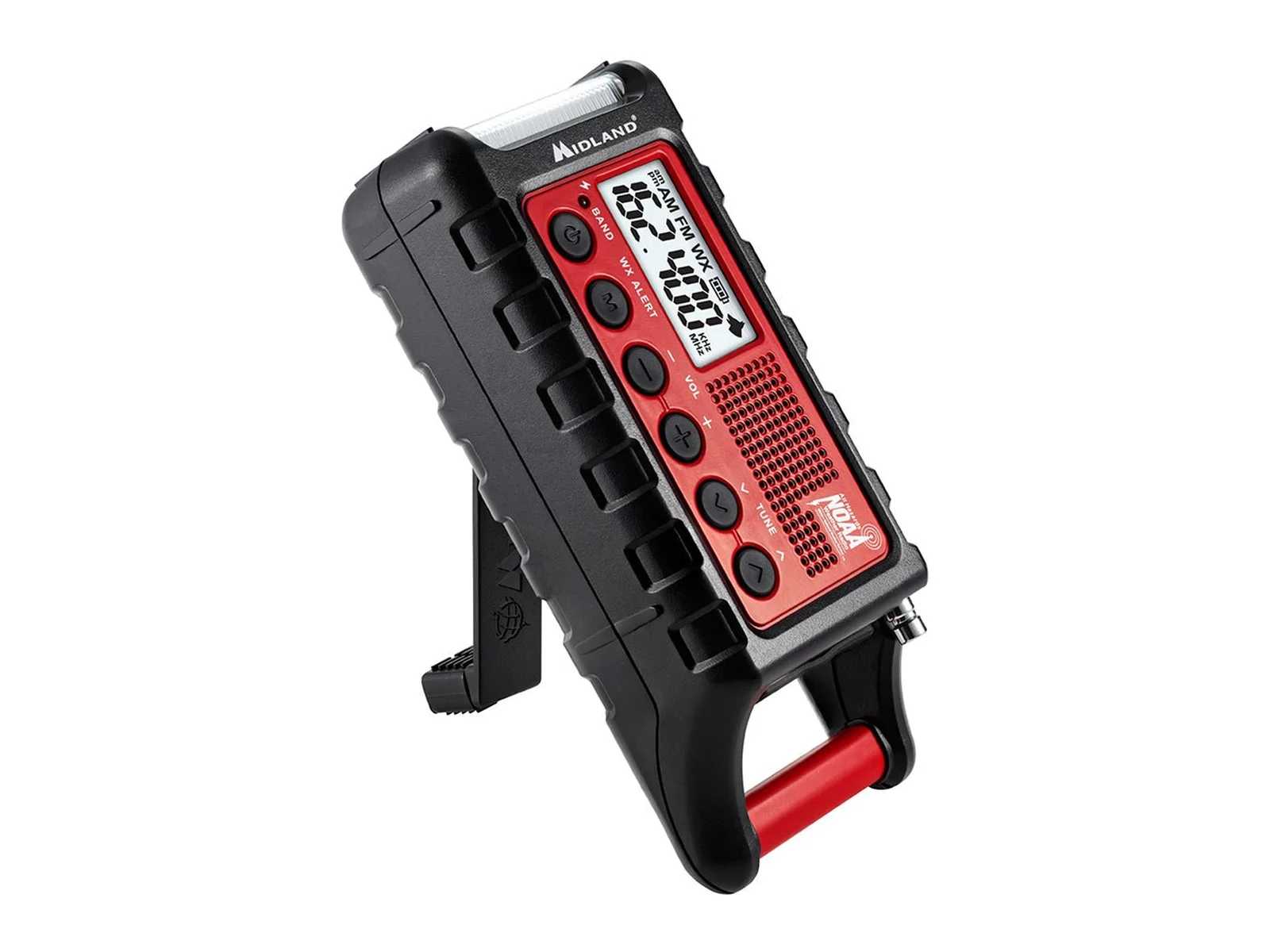
The Midland ER310 is our existing receive-only emergency-radio candidate with NOAA alerts and AM/FM. Its crank and solar options are backups to a maintained battery, not a reason to ignore charging.
A NOAA alert feature is not automatically county-selective SAME programming. NWS receiver guidance explains the different functions. Check the exact radio’s manual before assuming it can filter alerts by county, or provide a notification suitable for someone with hearing loss.
The Midland GXT67 Pro is a two-way GMRS candidate in our family-radio guide. Some two-way radios also receive weather broadcasts, but that does not make their standby alert behavior equivalent to a dedicated household receiver. Confirm the functions you need rather than treating every extra feature as interchangeable.
Write down who carries a radio, when you will try to contact one another and where you will meet if communication fails. Keep a phone, paper contacts and official local guidance in the plan. Try reception and lawful two-way communication at the locations where you expect to use them; a distance printed on a box is not a coverage guarantee.
In the United States, 47 CFR 95.1705 establishes individual-license requirements for GMRS and who may operate under a license. Check the rules for the exact service before transmitting. This guide does not provide a shortcut around licensing.
Not unless it includes the appropriate weather-band reception. NWS distinguishes ordinary broadcast reception from NOAA-compatible receivers.
The ER310 does not transmit calls. Keep a separate plan for contacting emergency services. Choose a receiver for alerts and a two-way system for the conversations it can actually support.
NOAA alerts, AM/FM, a flashlight and a phone charger that you can crank.
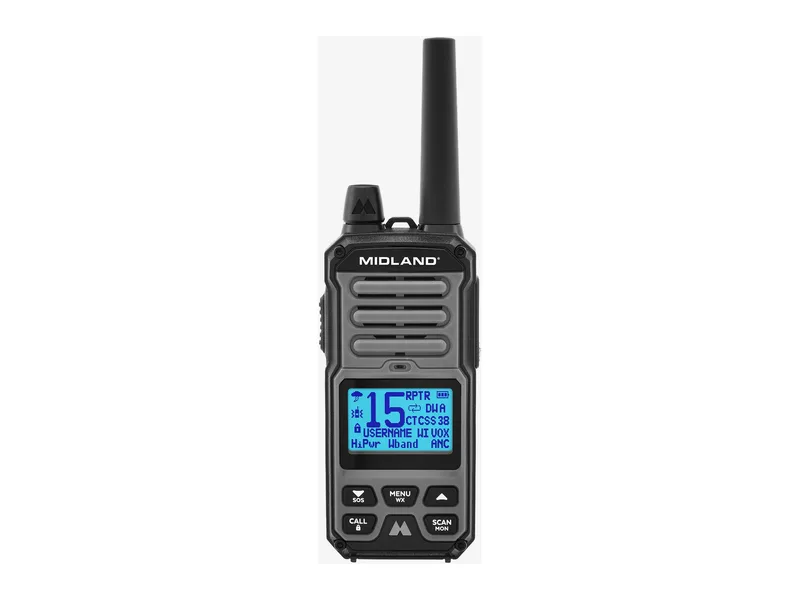
The easiest repeater-ready radio to hand to someone who's never used one.
Image credits: Midland ER310 Emergency Crank Weather Radio — Midland · Midland GXT67 Pro 5W GMRS Radio — Midland.